

Finding a Career Led by Purpose
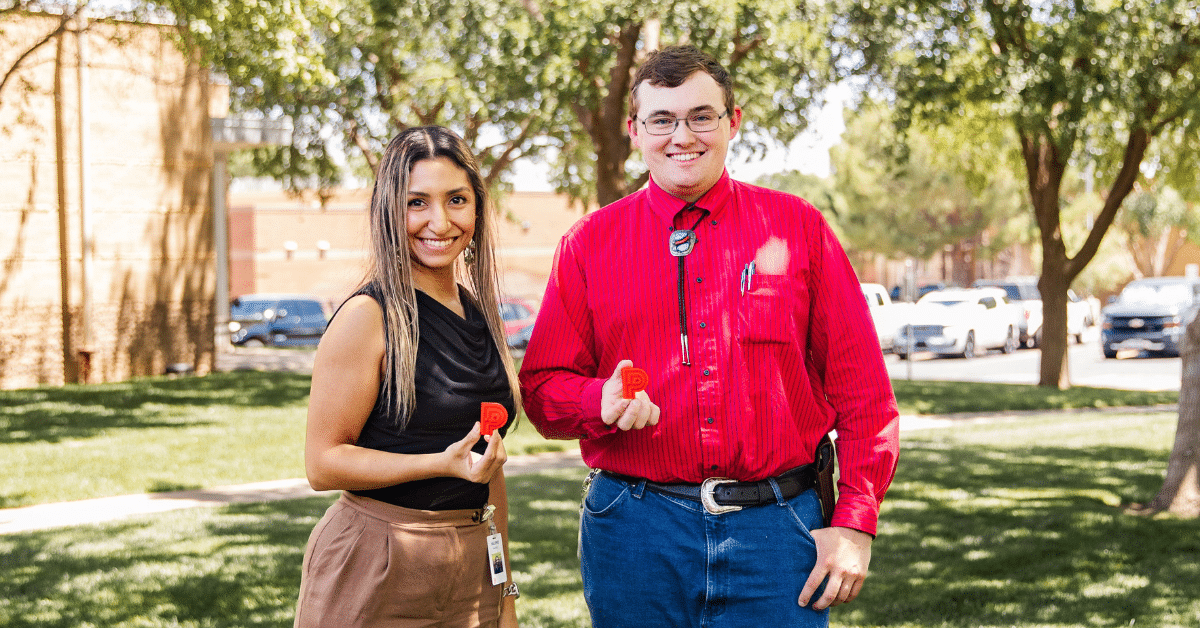
Student Connections Summer Blog Series: Parkhill’s Student Connections program focuses on growth and applying knowledge through real-world experience. This program welcomes young professionals of all backgrounds into our offices. It encourages them to build connections, confidence, and a sense of community that carries into their careers; many of them choosing to continue at Parkhill.
Winston Stevenson is an architecture student in Parkhill’s Lubbock office. Winston started with the Amarillo office the summer before his senior year of high school. Four years later, he continues to work at Parkhill while pursuing his degree at Texas Tech University, with plans to graduate in May 2027.
Winston Stevenson’s journey in architecture began with the thought, “I should get a job and see if this is really what I want to do.”
As a young man, Winston said he loved building, designing, drawing, and creating. Growing up around agriculture also gave him an appreciation for creation and how things work. Before committing to the architecture program at Texas Tech University, he decided to inquire and experience the profession firsthand. The summer before his senior year of high school, while he was homeschooled, he joined Parkhill’s Amarillo office with help from Brian Griggs, AIA, and Jon Braudt, PE.
Between completing his secondary education and deciding where to go next, he decided, “I loved my job. I loved what I got to do.” From there, he was offered a position in the Lubbock office as he began his undergraduate studies at Texas Tech.
Architecture is About Relationships
Throughout his four years at Parkhill, Winston has found mentors who have challenged him, encouraged his curiosity, and trusted him with meaningful opportunities.
Amber Buscarello, AIA, helped him understand the depth of the architectural process by involving him in a project from its earliest design conversations through construction. Melissa Walker, AIA, expanded that experience further through projects and site visits across multiple communities. Together, those relationships have given Winston opportunities to learn by observing, asking questions, and taking on greater responsibility.
He credits Brian with strengthening his early passion for architecture and showing him how traditional skills such as sketching still have a place in modern practice.
“I don’t know if you’ve seen any of Brian Griggs’ sketches and drawings, but I could genuinely sit in his office and watch him draw just for as long as he would. And he ignited that passion even more so in me. That has shown me how you can implement those things into how we do architecture today. It’s much more computer-based, but also it’s very relationship-based.”
That curiosity has been a defining part of Winston’s experience at Parkhill from the beginning, and those who have worked alongside him have seen it evolve as his knowledge and experience have grown.
“Winston has always possessed a willingness to ask questions, even dating back to his first days here as a high school student,” Brian said. “His questions were rooted in an inquisitiveness and determination to grow his knowledge and skill sets in the profession. In the years since then, those questions have become more tailored and focused on specific tasks — symbolic of an emerging professional, much like a knife or tool being sharpened to fine condition for use.”
Education and Experience Intertwined
Hands-on learning has changed how Winston views his education and the enthusiasm he has for sharing his experiences. He said the Beechcraft Bonanza airplane display at Wayland Baptist University in Plainview is one project that he gets excited about.
The Flying Queens, Wayland Baptist University’s women’s basketball team, traveled by plane to games during an important period in the program’s history. The university received a donated plane like the original and wanted to display it in front of its museum to honor the team.
The question, Winston said, was not whether Parkhill could complete this simple structural project; it was whether the project could be completed in just three weeks in time for homecoming. Winston, Brian, and structural engineer Zach Garrett, PE, got to work.
“We finished up the drawings as the plane was on a truck from Dallas to Plainview, sent the drawings, and got it built,” Winston said. “Three weeks later, I drove through Plainview and got to see it. And that was my first ever project that I had helped design that I got to see completed.”
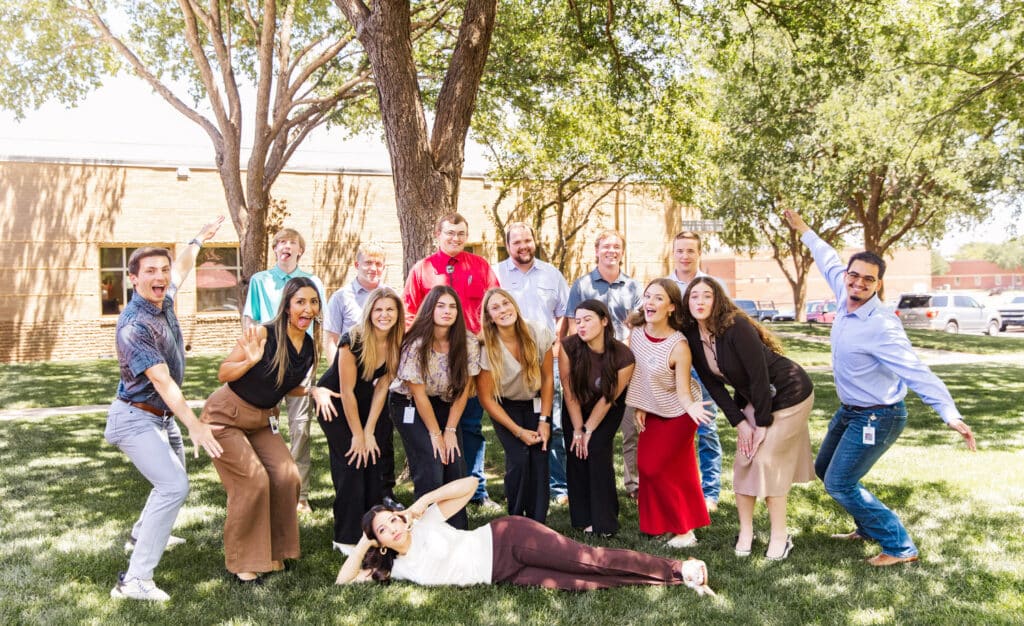 Student Connections encourages students to develop in their chosen profession, as well as build the skills required to be successful and enjoy the workplace!
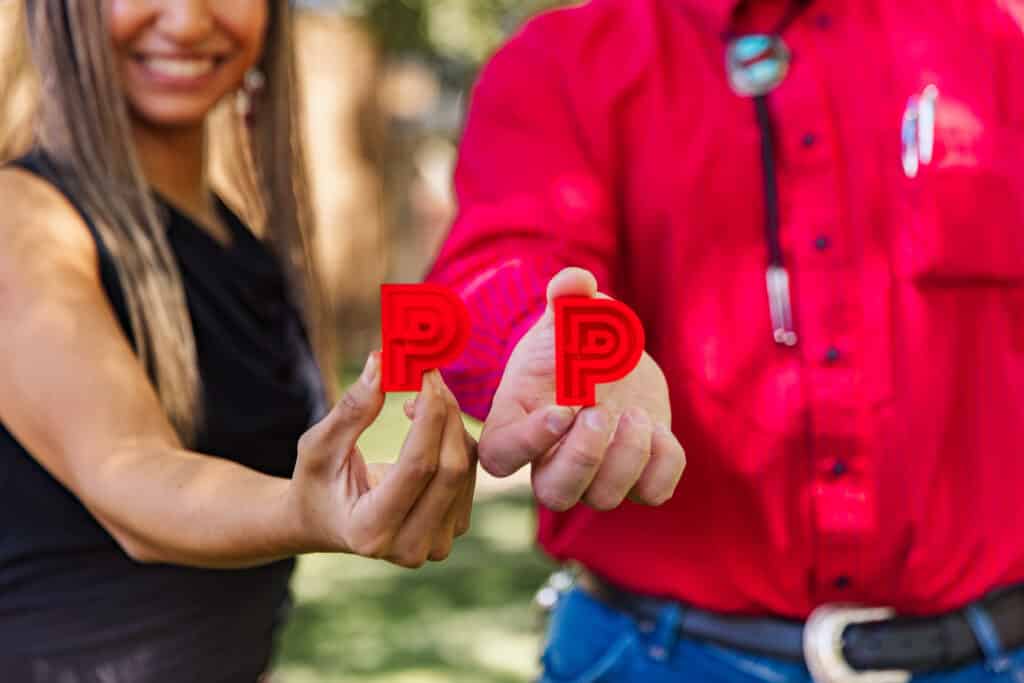 This year’s Student Connections program included a group 3D modeling assignment. Winston’s team created Parkhill’s logo.
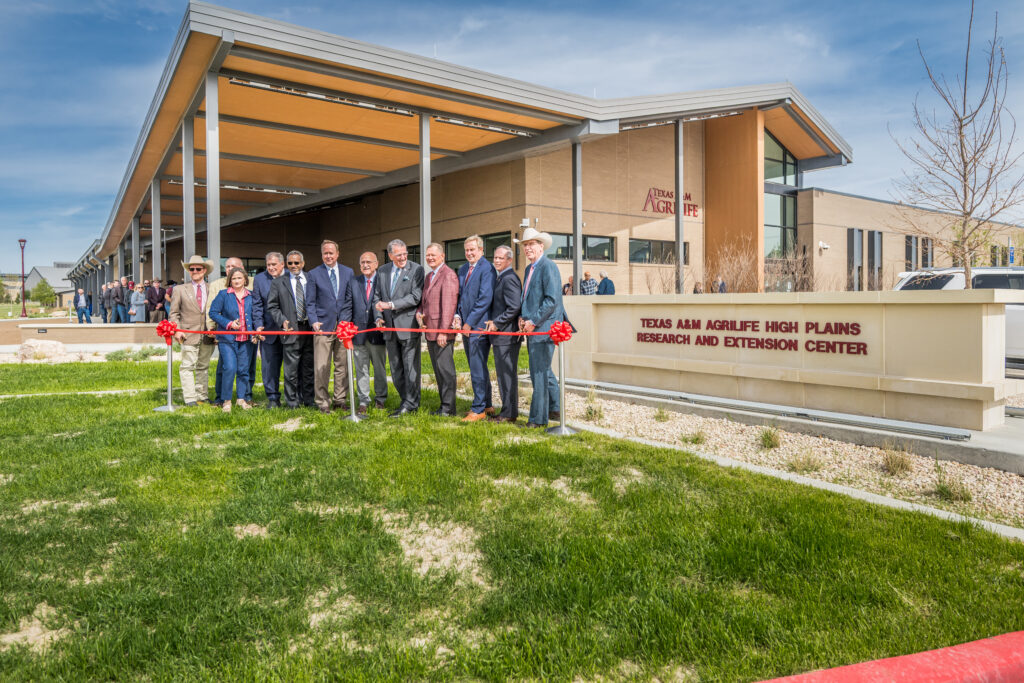 Winston’s work on the Texas A&M AgriLife Extension Center in Canyon, Texas, combined his agricultural past with his architecture education.
Designing with a Purpose
Seeing something he helped design become a physical part of a community gave Winston a new perspective on the impact of his work. On the Texas A&M AgriLife Research facility at West Texas A&M University in Canyon, that connection became more personal, bringing together his architectural education and the agricultural background that has shaped his life. Winston’s background allowed him to understand project conversations from both architectural and agricultural perspectives.
“One of the coolest parts of that project was one day I’d gotten back from work — my dad works at a feed yard up near Vega, and he comes home and says, ‘Hey, Winston, did you hear about that new AgriLife facility? We were talking about it today at work.’
“And I was like, ‘Yes, I did. I know about that facility because I’m helping design that facility. So I was getting to see how that building affected a ton of people that I’m really close with in the agriculture world.”
This experience reinforced something he had already begun learning from his mentors: architecture is not only about buildings. The people who use those places ultimately give them meaning.
“I love old country music,” Winston said. “There’s plenty of old country songs that talk about how it’s not just four walls; it’s the people within those four walls that make memories. I designed four walls, but I can design in a way that the memories will be better made in there.”
As Winston looks toward the next chapter of his education and career, his advice to other students reflects what his own journey has taught him. Pursue something you love — but also consider what that career allows you to accomplish.
“Do something that you love which will allow you to do even more of what you love,” he said. “I love my job. But even more than that, I love being able to help others. I love being able to provide. I love being able to serve. And I can confidently say that with this job and with where I see this job leading, I’ll be able to do that.”