

Library Design: Is Your Facility Keeping Up With Community Needs?
At eight years old, Shea Harp decided she had outgrown story time at her local library in Gatesville, Texas. A conversation with the library director would change the course of her life.
“I didn’t want to participate in the library’s story time anymore, and I approached the library director, and she said, well, if you don’t want to do story time, you need to volunteer.”
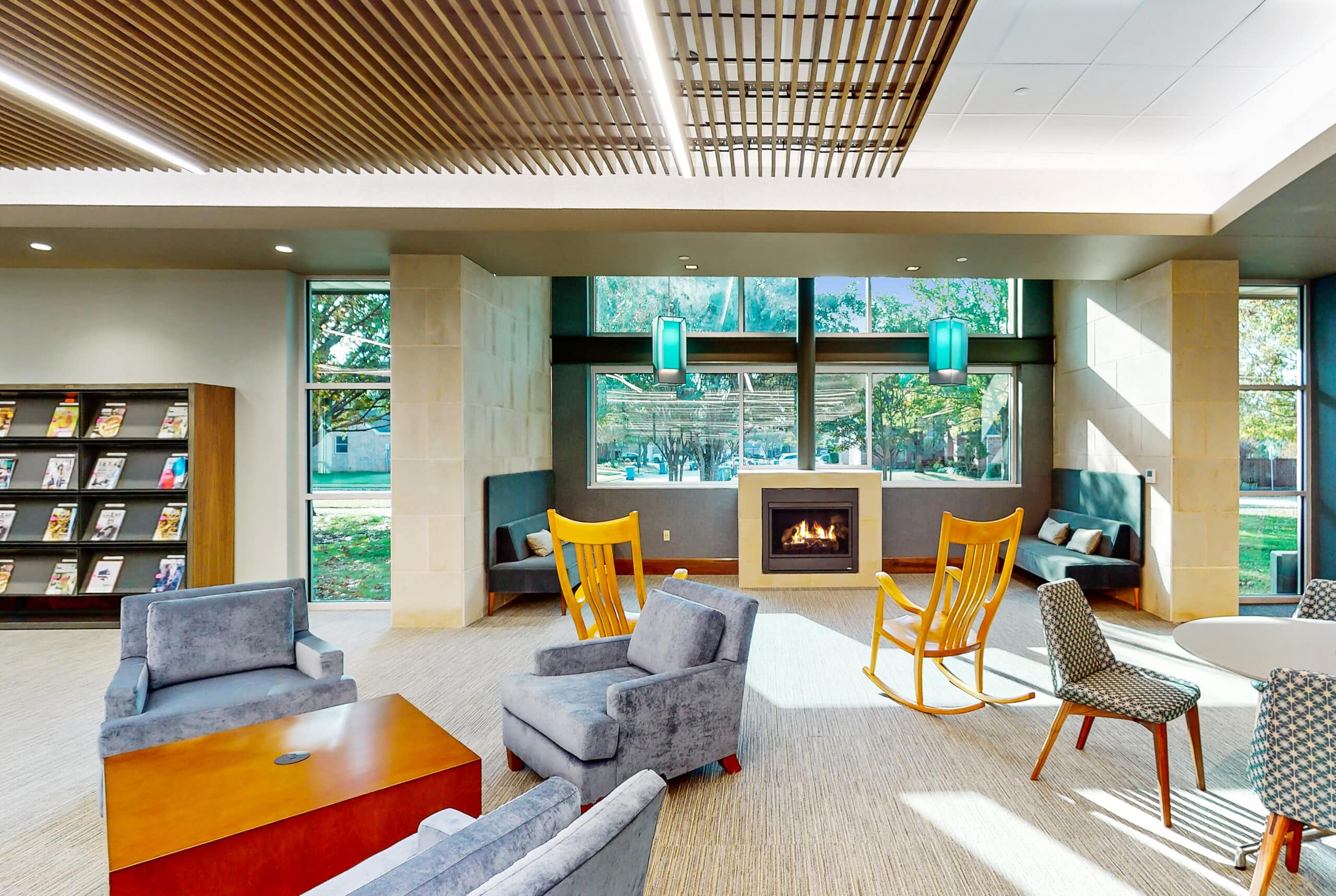
Texas libraries can change lives by creating opportunities for resources and services that extend beyond books. Urban sociologist Ray Oldenburg described places where people gather casually, voluntarily, and regularly outside their homes and workplaces as “third places.” For many communities, public libraries serve that role.
Parkhill Interior Design Practice Leader Amy Sibley, Associate AIA, sees libraries as accessible, welcoming destinations that evolve alongside the communities they serve.
“Libraries are not just about books or computers, but they have always been a gathering place,” Amy said. “They are a destination not just to get things but to do things.”
Built for Lending, Adapting to Change
A recent Texas Library Association (TLA) study, Beyond the Stacks: Measuring the Economic and Community Value of Texas Public Libraries, conducted by the JBK Economics Group, found that roughly 300 Texas public libraries provide essential public infrastructure roles, such as voter registration, social services, job application assistance, government benefits applications, telehealth, meeting neighbors, or loaning out lawn and garden tools.
These services require flexible meeting and classroom space, reliable technology, accessible layouts, and, in the case of telehealth requirements, privacy. In an October interview with the Texas Standard, TLA Executive Director Shirley Robinson said that many Texas libraries were designed in the 1960s and 1970s and need reinvestment to serve growing populations.
“Many library buildings were designed around books, reading areas, and basic public computer access. Today, libraries may also offer job-search help, telehealth resources, benefits assistance, social services, community programs, and emergency shelter,” Shirley said. “In older buildings, accommodating that range of activity can put pressure on rooms, technology, and building systems. The specific needs vary by library, but the broader point is clear: library facilities are supporting a wider range of community needs than many were originally built to serve.”
Hard-Working Spaces
Amy believes thoughtful design can help libraries accommodate changing programs while maintaining the character that makes each facility meaningful to its community.
She points to the Highland Park Harvey R. “Bum” Bright Library in Dallas, Texas, as an example of “updated design that serves a larger purpose.”
The 1930 facility kept its historical character while the design team updated interior mechanics and layout for programming, ADA compliance, and improved traffic flow. Working with artisans, the team restored original wood double-hung windows, pressed tin, and coffered ceilings, while creating additional space for diverse programs. Nuanced decor elements also serve practical functions without compromising the classic aesthetic. Patrons praised the result and said the library felt larger.
At the Flower Mound Public Library in Flower Mound, Texas, Amy’s team incorporated switchable glass that changes from clear to frosted, allowing clear glass-walled classrooms to become private spaces for confidential meetings or even patron telehealth visits. Teen areas could easily convert into space for groups, and outdoor spaces lend programming flexibility and serve as outdoor living rooms.
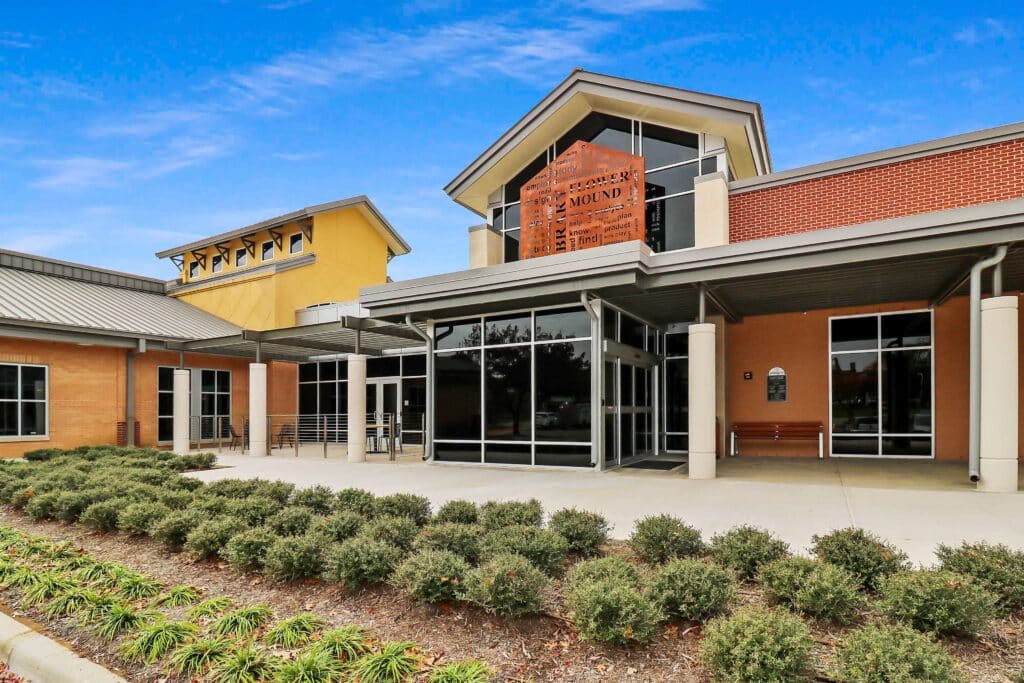 Flower Mound Public Library in Flower Mound, Texas.
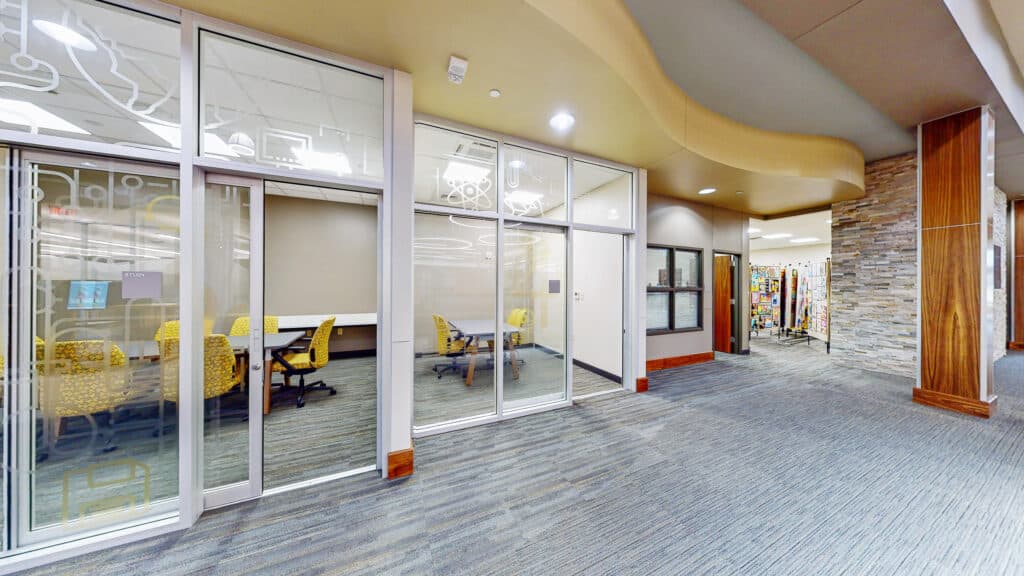 Flower Mound Public Library in Flower Mound, Texas.
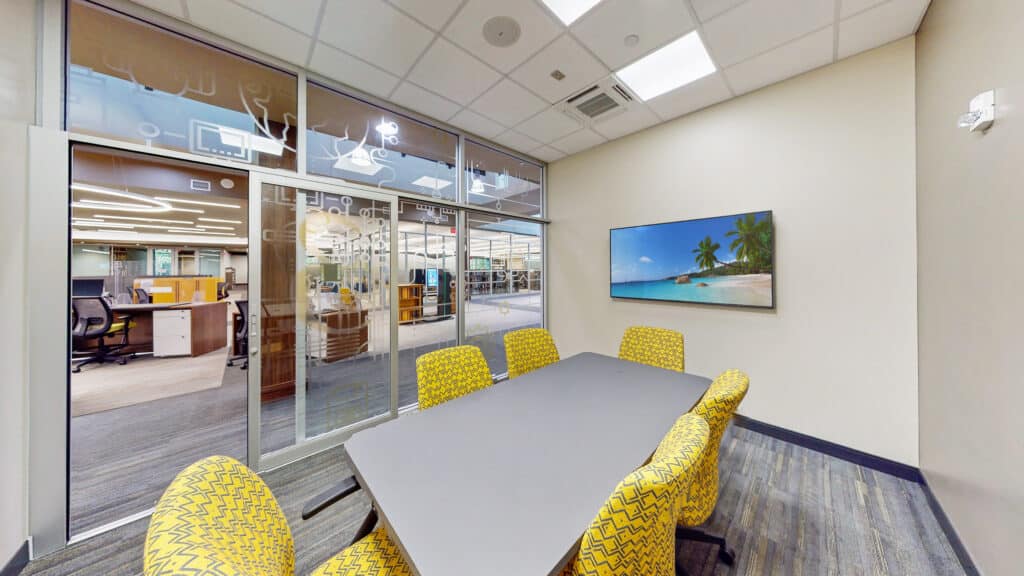 Flower Mound Public Library in Flower Mound, Texas.
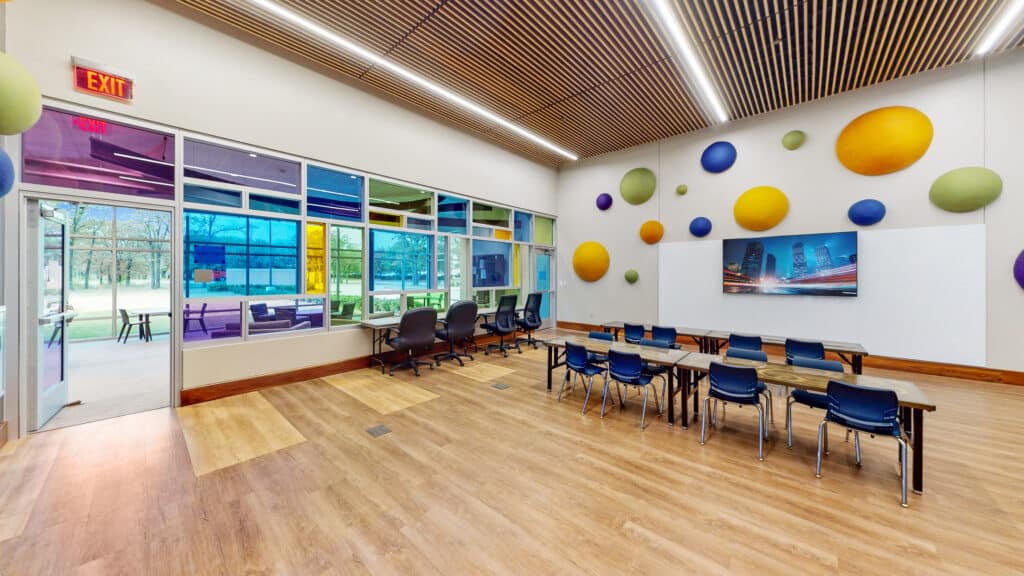 Flower Mound Public Library in Flower Mound, Texas.
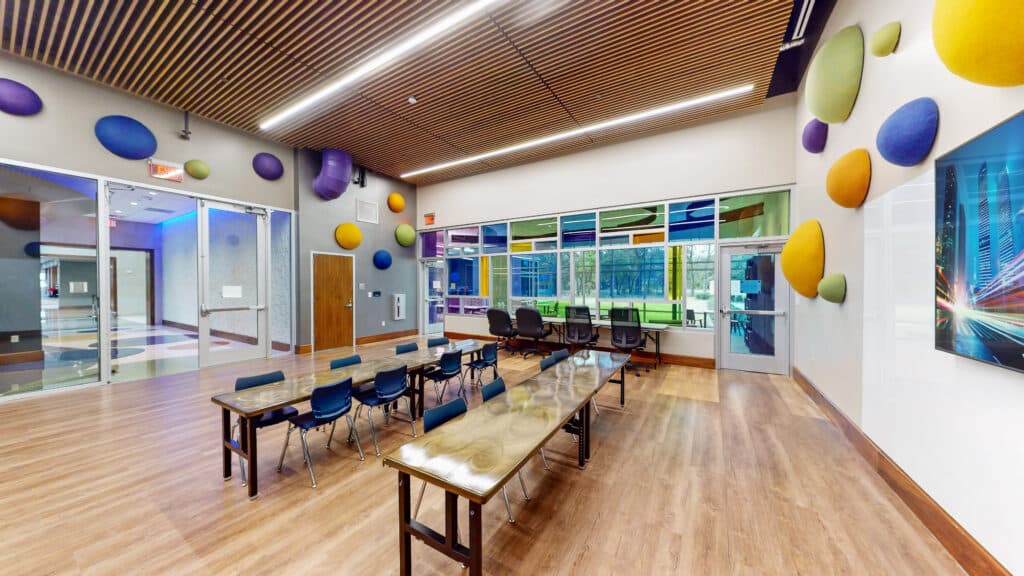 Flower Mound Public Library in Flower Mound, Texas.
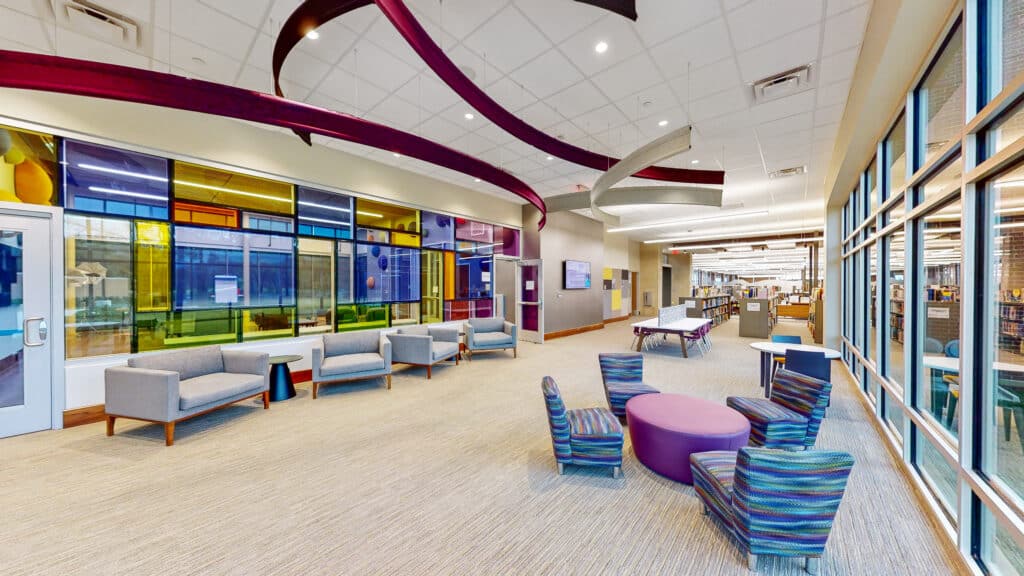 Flower Mound Public Library in Flower Mound, Texas.
Budget Realities and Older Buildings
Limited budgets require libraries to do more with fewer resources. According to the TLA study, Texas libraries report $808.6 million spending, including $717 million in operating expenses and $91.6 million planned for capital funding. That leaves a relatively small share of spending dedicated to facility updates.
“Aging library facilities can also limit the services a library provides,” Parkhill Senior Architect R. Ashley Coco, AIA, said. “In some older libraries, whole floors end up as storage while daily operations crowd into the rest of the building. Meanwhile, many newer library programs can fit well into older buildings with the right planning.”
Even new libraries adapt as patrons shape how they use community spaces. Ashley points to the 4,500-square-foot Wink Branch Library, in Winkler County. Its computer room was designed for technology experiences, including esports, and now serves visitors who come to do research.
“Needs drive the budget,” Ashley said.
Understanding how a community uses its library can help leaders prioritize improvements and make the most of available resources.
Making Library Value Adds Clear
The TLA study found that every $1 invested in Texas public libraries returns $4.74 in community value. Shirley said those numbers show what libraries are worth to their communities, but numbers alone won’t persuade local leaders to invest. Support from the people who use library services makes the difference.
“Community members can help by making the library’s value visible to the people who make the funding decisions,” she said. “Patrons can share how they use library services, speak at budget hearings, and help decisionmakers understand what those services make possible.”
For Shea Harp, the value of a library has been personal since childhood.
The young girl who traded story time for volunteering never left the library. Today, she is the executive director of the Gatesville Public Library.
One of her library programs, Vision Connect, began when a longtime patron started losing her vision and now offers free independent living skills instruction through community partnerships, drawing participants from as far as Waco and Temple each month.
As Texas libraries continue evolving into community gathering places, stories like Shea’s can help communities advocate for the maintenance, renovations, and investments needed to create spaces that foster connections, respond to individual needs, and open doors to life-shaping opportunities for future generations.