

Transforming El Paso International Airport
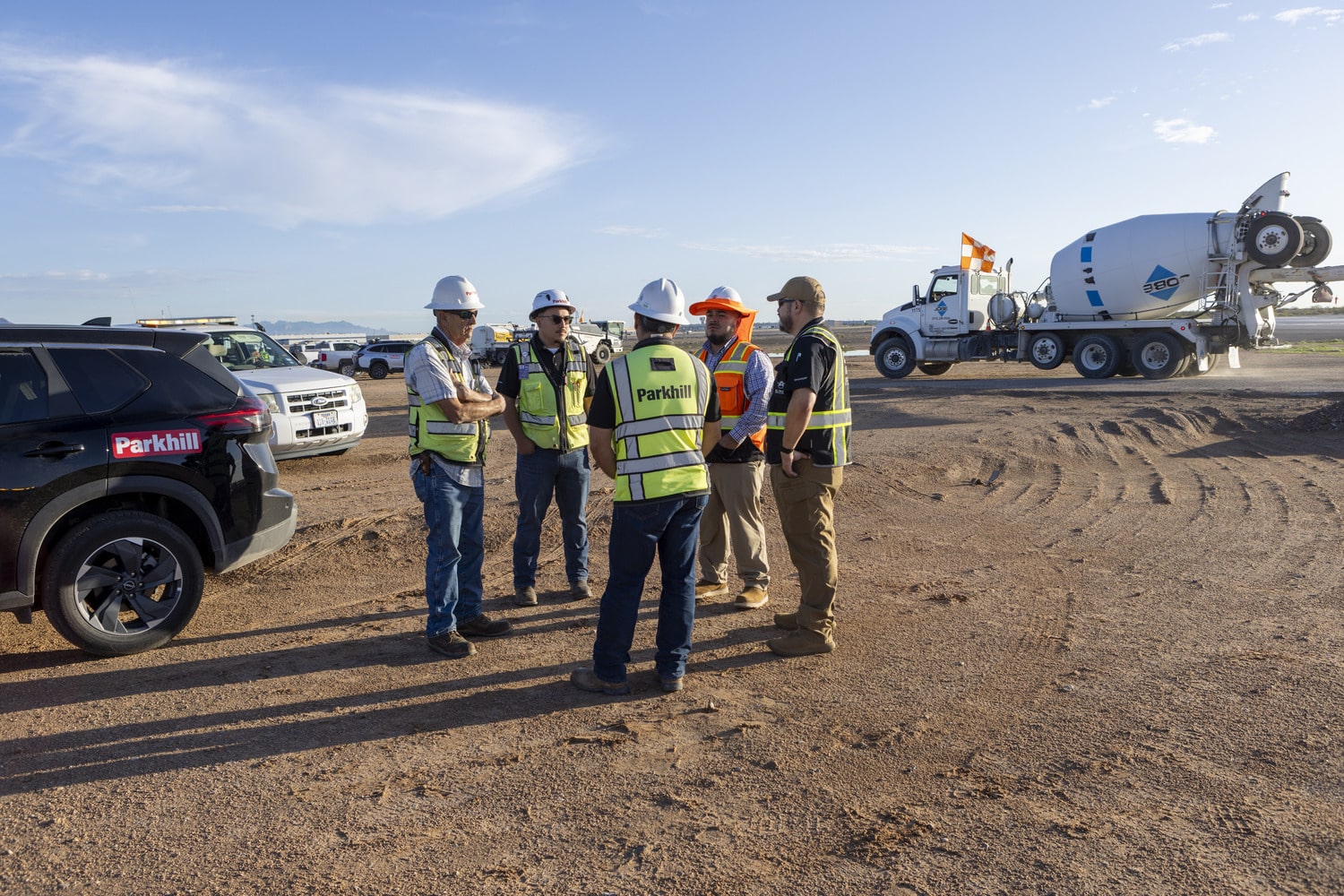
Improving a busy airport is like rebuilding a highway while keeping traffic moving. At El Paso International Airport (EPIA), Parkhill’s construction management team helped deliver critical airfield improvements while maintaining safe, uninterrupted operations for travelers, airlines, and airport staff. In collaboration with Garver, the project designer, these projects support EPIA as a critical transportation gateway, supporting daily travel, commerce, military readiness, tourism, and regional connectivity for communities on both sides of the U.S.-Mexico border.
“These projects are not just infrastructure upgrades,” said Cynthia Diaz de Leon, Assistant Construction Manager. “They are strategic investments that support our community’s growing mobility needs and strengthen the airport’s ability to efficiently serve the region for years to come.”
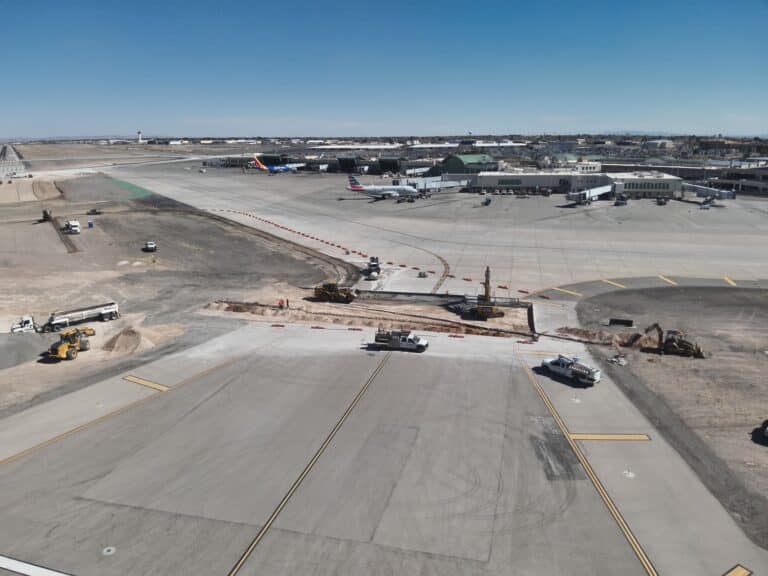
Phased improvements to runways, taxiways, ramps, drainage systems, and lighting enhance airport operations and were all completed while minimizing operational disruptions throughout construction. The team worked in continuous collaboration with the ELP Air Traffic Control Tower, Airport Operations, and the FAA to sequence construction activities, maintain safe aircraft routing, and provide uninterrupted access to runways, aprons, and terminal facilities.
The Value of Continuity
“One of the greatest benefits of having Parkhill’s Construction Management team involved throughout the entire series of improvements is the continuity of knowledge, relationships, and communication that develops over time,” said Chris Edens, Assistant Construction Manager. “By remaining engaged from project to project, our team maintains a deep understanding of the client’s goals, operational needs, and long-term vision for the airport.”
Parkhill’s consistent involvement creates a steady flow of information, reduces learning curves, and allows the team to proactively identify opportunities and challenges before they affect the project. Long-standing relationships with airport leadership, operations personnel, the FAA, airlines, and the general aviation community help navigate complex projects more efficiently, align priorities, and support informed decision-making.
Another benefit is operational familiarity that has directly contributed to cost savings. That continuity has helped Parkhill consistently deliver airfield improvements under budget.
“We have built approximately $60 million in airfield improvements and have come in under budget while maintaining critical operations on the airfield,” said Mike Ramirez, CCM, Construction Manager.
The General Aviation Ramp Reconstruction
Most recently, the team completed the General Aviation Ramp Reconstruction, which expanded operational capacity and improved pavement conditions for based and transient aircraft.
“Getting to this point represents months of planning, coordination, and problem-solving between contractors, tenants, engineers, and airport staff,” said Cynthia Diaz de Leon, Assistant Construction Manager. “Delivering work in an active airfield environment always comes with unique challenges, and I’m proud of the way the entire team has worked together to keep the project moving safely and efficiently.”
Key improvements included full-depth pavement reconstruction to restore pavement conditions, drainage system enhancements across the ramp area, geometric reconfiguration and construction of new connectors to improve aircraft circulation, FAA-compliant upgraded airfield lighting and grading, and elimination of a known airfield “hot spot” through the companion Five Node Remediation project, which simplified a complex intersection to improve traffic flow and safety.
Partnership and Growth
In addition to completing improvements without interrupting airport operations and remaining under budget, Mike said he’s proud of the young professionals from Parkhill taking on more responsibility.
“I think I’m most proud of getting our younger staff plugged in and getting them to a position where they are trusted by one of our most high-level clients in the El Paso region,” he said.
For Cynthia, the experience reinforced a foundational lesson about what it takes to deliver complex work in a demanding environment. On a project of this scale, challenges and unexpected issues are inevitable, and she learned early on that not every problem has a clear solution. The most effective approach, she found, was to address issues directly, communicate openly with all stakeholders, and work collaboratively to develop solutions.
“Maintaining transparency, trust, and open communication helped keep the project moving forward and strengthened relationships across the entire project team,” she said “This experience reinforced that successful project delivery is not just about managing schedules and budgets. It is also about building strong partnerships and creating an environment where challenges can be addressed openly and resolved.”
Communication, transparency, shared purpose, and a sense of community built through working together created a strong foundation for innovation. Chris said that was what he was most proud of at EPIA.
“By combining practical experience with forward-thinking approaches, we have been able to improve airfield management and movement while creating infrastructure that will serve the airport for years to come,” he said “Seeing these improvements come to life and knowing they contribute to a safer, stronger, and more connected community embodies Parkhill’s mission of Building Community and vision of Enhancing Lives and Inspiring People through thoughtful, relevant infrastructure.”