

More Than Shelter: Understanding Home Through World Architecture Day
While the meaning of home is deeply personal, the need for a safe, accessible, and dignified place to call home is universal. Home starts with a building, but it also includes memories, a community, or simply the feeling of belonging.
This World Architecture Day, the theme “Housing is a human right” invites the design profession to consider both the meaning of home and its responsibility to help address housing needs. For Parkhill architects Dan Hart, FAIA, PE, Mike Moss, AIA, Kim Hooker, AIA, LEED AP, Karl Komatsu, AIA, and Mary Stills, AIA, CNU-A, that conversation begins with recognizing that housing is about more than providing shelter. It is about creating a foundation where people make memories with family and friends, feel comfort and stability, and experience everyday life.
More Than Four Walls
“Home is more than the house we live in,” Dan said. “It’s the feeling of belonging to a place: knowing your neighbors, trusting the streets, and having a school, a library, a clinic, and a park that feel like yours. A house gives us shelter. A community makes us feel at home.”
Dan has witnessed this reality in both his hometown of rural Seymour, Texas, and around the world. Walking to school, conversations with neighbors in the street, and playing in the community park — we all have those types of strong memories we associate with home.
Karl sees home as something equally fundamental, both physically and psychologically. Citing French philosopher Gaston Bachelard’s The Poetics of Space, he points to the ways our earliest environments become connected to memories, identity, and our understanding of ourselves.
“Psychologists have referenced our early and ongoing sense of home or its memories as a critical determinant of our psyche’s well-being as adults,” he said. “The expression runs as deep as ‘No place like home.’”
For Kim, memories of her childhood home in Michigan remain so meaningful that she avoids driving past the property, where the original house has been replaced with new development.
“Many equate bigger with better, but size alone does not make a better home,” she said. “Some of my happiest memories are of putting my children to bed when all three shared one room with a bunk bed and a crib. My personal experience shaped my understanding of home. My design sense pushes me to want to contribute to homes for others.”
A Foundation for Everyday Life
Before a house can become a place filled with memories, however, it must meet fundamental needs.
Mike said that a home begins with “something simple: a safe, secure, and weathertight structure that is heated and cooled.” Although he has not personally experienced inadequate housing, he has witnessed families who have and seen the impact that uncertainty can have.
“When you spend part or most of your day worrying about your home, you can’t be focused on your job, your children, your spouse and the many other activities that are required of you throughout the day,” he said.
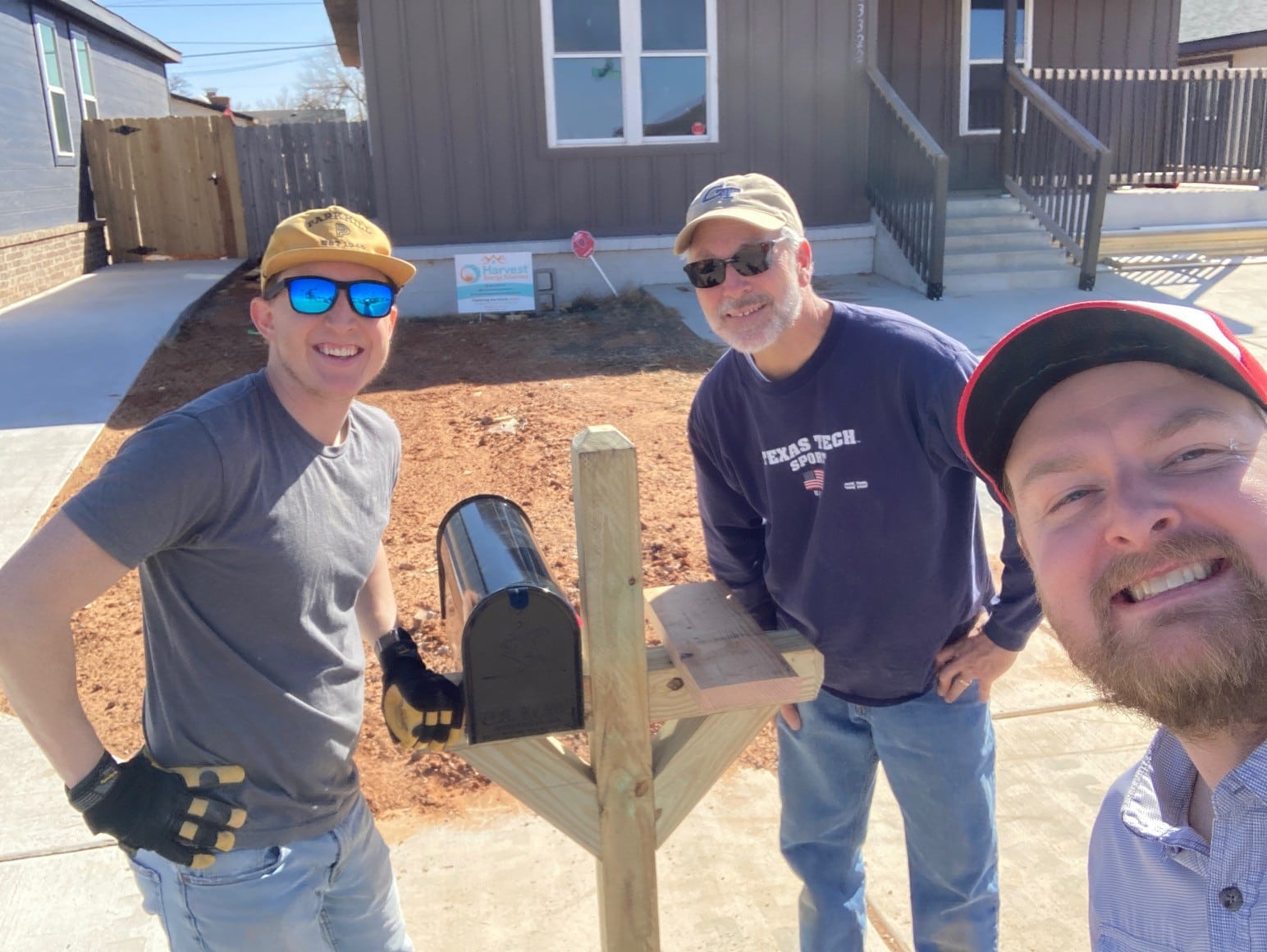
That experience has given World Architecture Day’s theme, “Housing is a human right,” a personal meaning, and the continued need inspires him to be part of Habitat for Humanity home-building projects in Lubbock.
Mary has been involved with her local chapter of the Underserved Communities Foundation (UCF) in El Paso for several years. UCF’s mission is grounded in the belief that “every person, regardless of background or circumstance, deserves the opportunity to live in a safe, stable, and dignified home environment.”
The organization operates two programs, Sweet Beginnings and Harmonious Home, which provide household essentials and furnishings to individuals and families transitioning from homelessness into permanent housing. Mary has helped UCF secure multiple Parkhill Building Community Investment grants that have provided participants with necessities ranging from kitchenware and linens to beds, dressers, and dining furniture.
She said, “By assisting individuals and families as they transition from shelters or temporary housing into permanent residences, the program helps create safe, comfortable, and dignified living environments where they can establish stability and begin building a brighter future.”
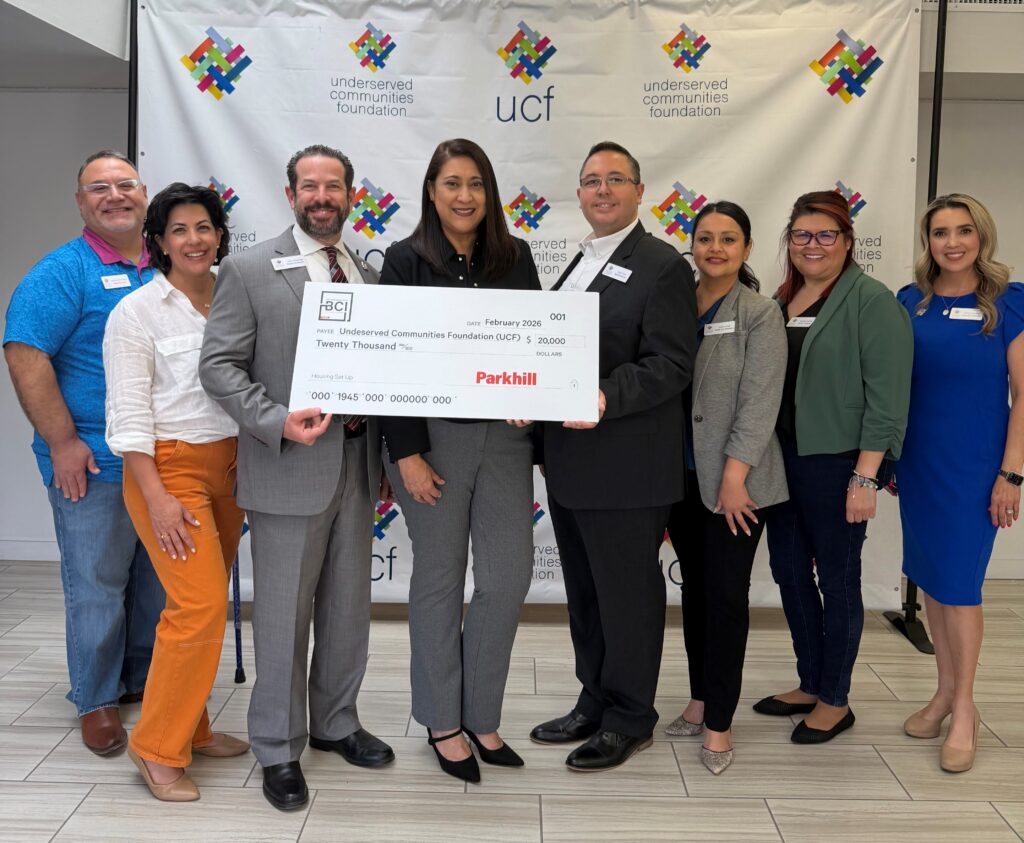 The mission of the Underserved Communities Foundation is grounded in the belief that everyone deserves a home.
Mary Stills, AIA, has been involved with the organization
for several years.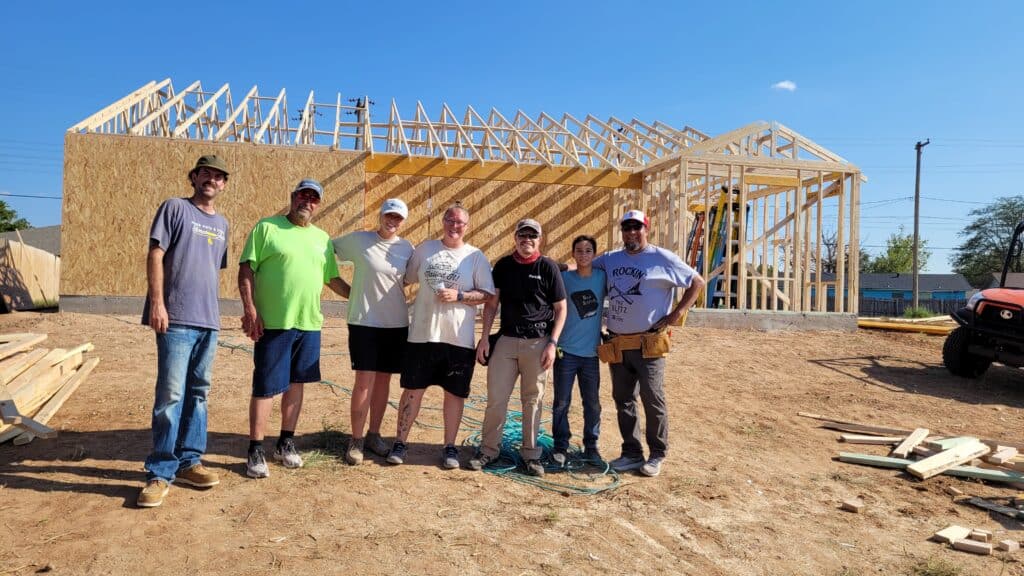 Parkhill locations across the Southwest have served their local chapters of
Habitat for Humanity for housing projects including Blitz Build.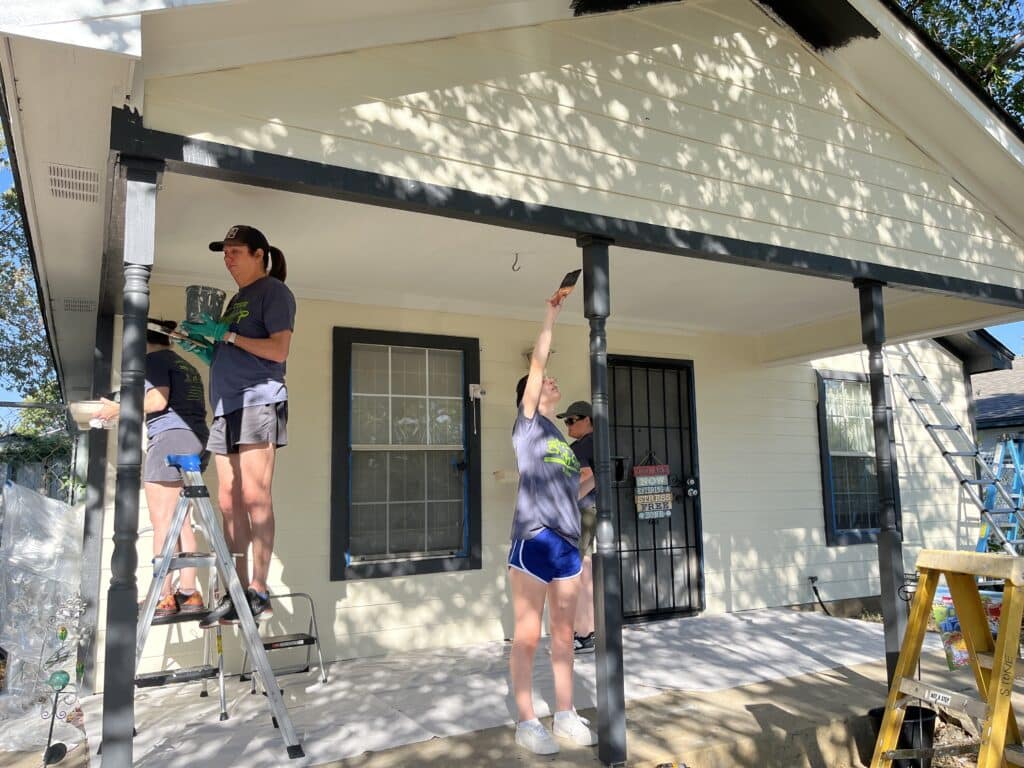 Design professionals can join efforts in a multitude of ways to apply skills outside traditional project work, whether joining a hands-on project or serving on a nonprofit board.
Inspired by Design Thinking
Being an architect can shape a deeper understanding of a structure’s purpose and the importance of quality and attention to detail.
Design thinking provides a way to understand complex challenges, listen to the people affected by them, test possibilities, and discover innovative solutions. Even though Parkhill does not offer residential design and home-buildign services, we can still join efforts to apply our skills outside traditional project work by serving on planning commissions and nonprofit boards, participating in conversations about zoning and policy, helping adapt existing buildings, providing pro bono services, and making sure future professionals also understand the importance of these efforts.
During his tenure as the 98th president of the American Institute of Architects, Dan encouraged architects everywhere to remember, “Design is our superpower.”
Dan said, referencing The Future of the Professions, a book by Daniel Susskind and Richard E. Susskind, “The Susskinds challenge us to recognize that society needs our expertise far more than it needs us to work the way we always have. Too often, the benefits of professional knowledge reach only the few who can afford it. Architects can change that by bringing our superpower wherever we show up.”
Karl similarly sees opportunities for architects to collaborate on solutions ranging from affordable and subsidized housing to veterans and special-needs housing. He also points to the relationship between housing and larger infrastructure challenges, including energy costs and access to utilities, particularly in rural communities.
For Kim, making an impact can begin with four steps: read, reflect, evaluate, and act. Learn about the housing challenges facing communities, consider how professional skills can help, identify organizations already doing meaningful work, and find a place to contribute.
She said, “Meaningful change often begins with a single decision to be part of a solution.”